Why Your French Press Tastes Muddy: Troubleshooting Grind, Pour, Steep, and Plunge
A French press should give you a rich, full-bodied cup, not a gritty, muddy one. If your press coffee tastes silty or bitter, the culprit is almost always one of four variables. Here is how to diagnose and fix each of them.
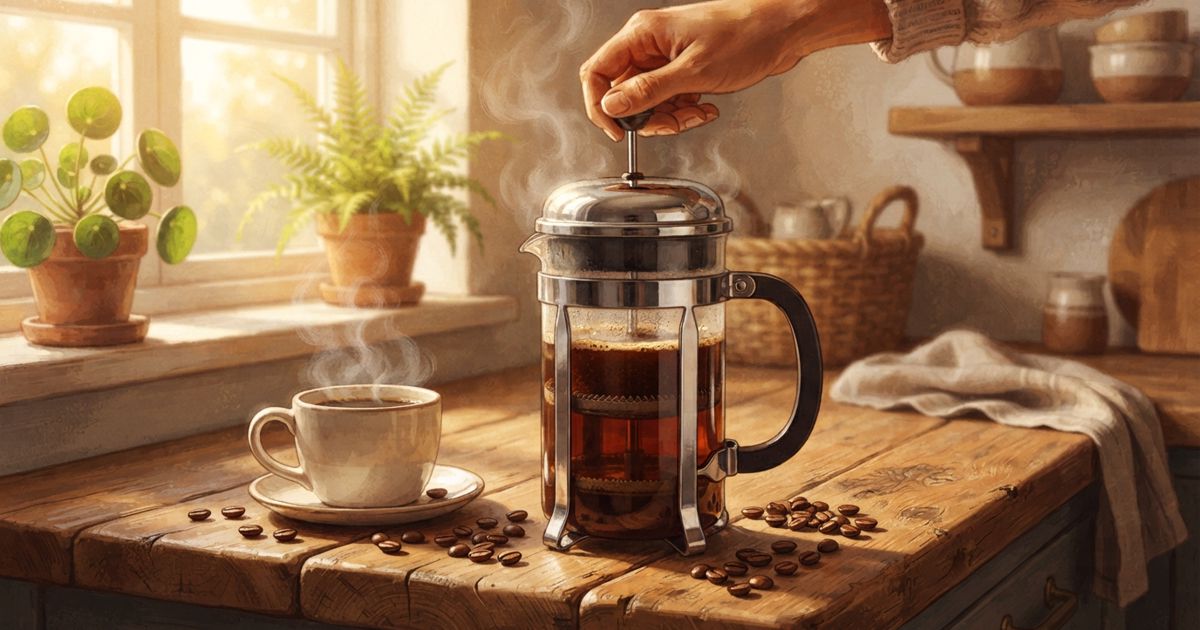
Table of contents
The French press is one of the most forgiving brewers you can own, which is exactly why a bad cup feels so frustrating. It has no paper filter, no finicky pouring pattern, and no pressure to manage. And yet plenty of people end up with coffee that tastes muddy, gritty, or heavy in a way they cannot explain. The good news is that muddy French press coffee almost always traces back to one of four variables: grind, pour, steep, and plunge. Work through them in order and you will find the cup you were promised.
Why "muddy" happens at all
The French press uses a metal mesh filter, which by design lets through more of the coffee's oils and fine particles than a paper filter would. That is the source of its signature body and richness. But it also means the press has less margin for error when it comes to fine particles. Too many fines, over-extraction, or agitating the grounds at the wrong moment all push the cup from rich toward muddy. Each of the four variables below either adds fines, adds bitterness, or stirs sediment into your cup.
Variable 1: Grind size and consistency
This is the number one cause of muddy French press coffee, full stop. The press wants a coarse, even grind. Coarse, because larger particles resist over-extraction during the long steep and are held back by the mesh. Even, because a grind full of fine dust will slip through the filter and settle as silt at the bottom of your cup.
Two separate problems live here:
- Too fine overall. A medium or fine grind over-extracts during the steep and clogs the mesh, producing bitterness and sediment. Go coarser than you think you need to.
- Too inconsistent. Even at a coarse average setting, a grinder that produces a lot of fines alongside the big chunks will muddy the cup. This is where equipment matters. Blade grinders are notorious for uneven output. A burr grinder produces a far more uniform particle size, which is why our burr grinder guide and the broader explainer on why grind size matters both point new brewers toward burrs first.
If you fix only one thing, fix the grind. Set it coarse, and if your grinder allows it, aim for consistency over any single number.
Variable 2: The pour and the bloom
How you add water matters more than French press users expect. Water that is off the boil is ideal; water at a rolling boil poured aggressively scorches the grounds and can push extraction toward harshness. Let a freshly boiled kettle rest briefly before pouring.
The bloom is the second half of this. When you first add a little hot water to fresh grounds, they release trapped gas and swell. Giving them a short bloom, then adding the rest of the water in a steady pour, wets the coffee evenly and keeps a dry clump from hiding in the middle of the brew. An even, gentle pour also stirs up fewer fines than a hard, splashing one. If your water itself tastes off, that carries straight into the cup too; our note on water quality for coffee covers why.
Variable 3: Steep time
The French press is an immersion brewer, which means the coffee sits in contact with the water for the entire brew. The longer it sits, the more it extracts, and past a certain point that extra extraction is all bitterness and heaviness. If your grind is right but the cup still tastes over-extracted and thick, your steep is probably running long.
A few practical habits help:
- Time it. Do not eyeball the steep. Use a timer so every brew is comparable, and you can adjust deliberately.
- Do not let it sit after plunging. Coffee left on top of the grounds after you plunge keeps extracting. Decant it into a mug or a separate vessel promptly so it stops brewing.
- Adjust one thing at a time. If you shorten the steep, keep grind and ratio fixed so you know what caused the change.
Over-steeping and too-fine a grind produce similar symptoms, which is why it helps to lock in a coarse grind first and only then tune the time.
Variable 4: The plunge and the pour-out
The plunge is where a lot of otherwise good brews turn muddy at the last second. The mesh should glide down slowly and steadily. If you slam the plunger down, you force fines up through and around the filter and blast sediment into suspension. Slow and gentle is the whole game.
Two more habits keep sediment out of your mug:
- Consider skimming or a gentle break. Some brewers break the crust of floating grounds and skim it before plunging, which removes a share of the fines that would otherwise end up in the cup.
- Leave the last bit behind. The very bottom of the press holds the heaviest sediment. Pouring out the final splash rather than chasing every drop leaves the muddiest part where it belongs.
Decanting fully also matters. Coffee left sitting on the grounds not only over-extracts, it keeps sediment stirred up. Pour it all out once you are done.
A simple troubleshooting order
When a cup goes muddy, resist the urge to change everything at once. Work through the variables in this order and change one thing per brew:
- Grind first. Go coarser and, if you can, more consistent. This solves most cases.
- Then steep time. If it still tastes heavy and bitter, shorten the steep and decant promptly.
- Then the pour. Water just off the boil, a short bloom, a gentle even pour.
- Then the plunge. Push down slowly, skim if you like, and leave the last silty splash behind.
The cup you are aiming for
A well-made French press is rich and full-bodied with a pleasant heaviness, but it should be clean underneath, not gritty. You should taste the coffee's sweetness and body without a layer of silt on your tongue or a bitter edge that lingers. Almost every muddy cup is fixable, and usually the fix is coarser grounds and a gentler hand. If you are still building the fundamentals, the same principles show up across every method, which is why our roundup of common beginner coffee mistakes keeps coming back to grind, water, and technique. Dial those in and the French press rewards you with one of the easiest great cups in coffee.


