Paper, Metal, and Cloth Filters: How Each Changes Body, Clarity, Cleanup, and Cost
The filter is the last thing your coffee touches, and it quietly shapes body, clarity, cleanup and cost. Here is how paper, metal and cloth compare so you can match the filter to the cup you want.
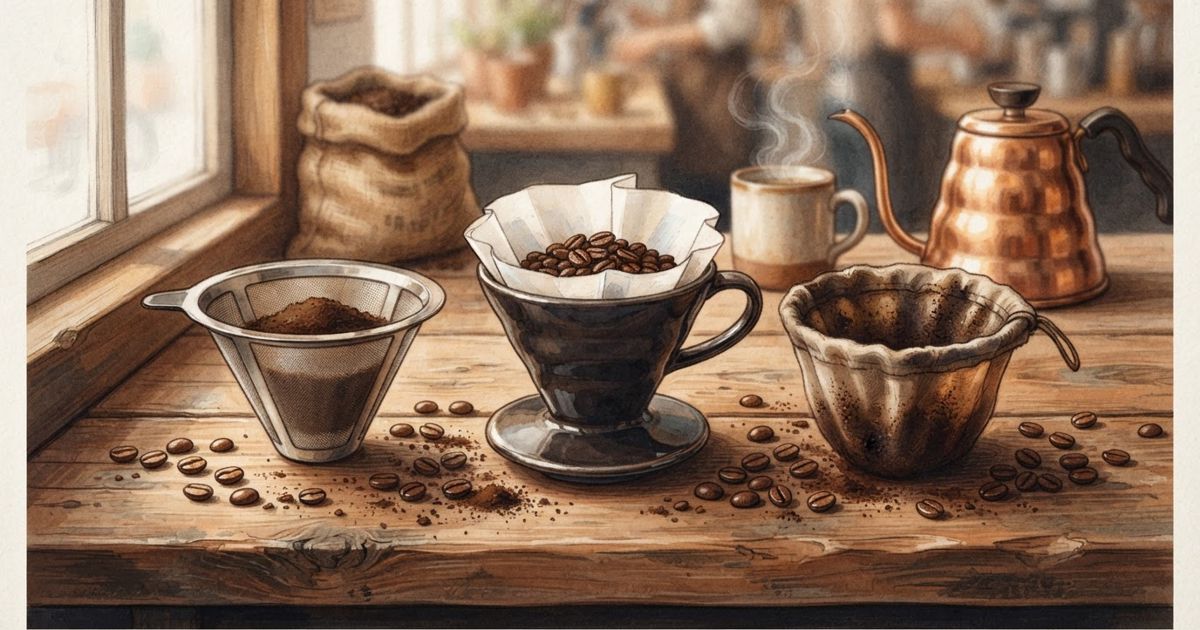
Table of contents
It is easy to obsess over beans, grinders and brewers while ignoring the humble filter — the last thing your coffee touches before it reaches the cup. Yet the filter you choose quietly shapes how the coffee tastes, how clean it looks, how much sediment sits at the bottom, and how much time you spend at the sink afterwards. Paper, metal and cloth each make a different set of trade-offs. Knowing them helps you match the filter to the cup you actually want.
The one thing filters really control
Every filter is doing the same basic job: holding back grounds while letting brewed liquid through. The differences come down to how fine the filter is and what it lets pass. Two things in particular slip through — or do not:
- Fines: the tiniest coffee particles, produced by any grinder.
- Oils: the natural oils and fats extracted from the beans.
How much of each reaches your cup is the whole story of body, clarity and cleanup. If you want to reduce fines at the source, that starts upstream with your grinder — but the filter is your last line of control.
Paper filters: clarity and easy cleanup
Paper is the most common filter for a reason. It is the finest of the three, trapping both most of the fines and most of the oils.
- Body: lighter and cleaner. Paper strips out oils and sediment, so the cup feels tea-like and crisp rather than heavy.
- Clarity: the highest. Flavours read as distinct and articulate, which is why pour-over fans reach for paper — see our pour-over for beginners guide for the method paper suits best.
- Cleanup: the easiest by far. Lift out the paper, grounds and all, and bin or compost it. The brewer barely needs rinsing.
- Cost: low per filter, but you buy them again and again. It is a small, ongoing expense rather than a one-off.
One habit worth adopting: rinse the paper with hot water before brewing. It warms the brewer and washes away any papery taste that could otherwise creep into a delicate cup.
Metal filters: body and no waste
Metal filters — usually fine mesh or a perforated disc — sit at the other end of the spectrum. Their openings are larger than paper's pores, so they let oils and some fines through.
- Body: fuller and heavier. Those oils carry texture and a rounder mouthfeel, and a fine layer of sediment adds weight.
- Clarity: lower. The cup is richer but less crystalline, with flavours that blend rather than separate. Some drinkers love this; others find it muddy.
- Cleanup: more effort. You knock out the grounds and rinse the mesh, and over time oils can clog the fine holes, so an occasional deeper clean keeps it flowing.
- Cost: higher upfront, essentially free thereafter. One good metal filter can last for years, producing no paper waste.
Metal is the natural fit for anyone who likes a bold, textured cup and dislikes throwing filters away.
Cloth filters: a middle path
Cloth filters are the traditional option that many people never try, and they land neatly between paper and metal.
- Body: medium. Cloth holds back most fines like paper but lets more oil through than paper does, giving a cup that is clean yet still has some weight and softness.
- Clarity: high, often described as smooth and silky — the sediment of metal without the full oil-stripping of paper.
- Cleanup: the most demanding. Cloth must be rinsed thoroughly after every use and kept damp or frozen between uses, because dried-on coffee oils turn rancid and taint future brews. Neglect is the main reason people give up on cloth.
- Cost: low to buy, reusable for a long time if cared for — but the care is real, ongoing work.
Putting it side by side
| Filter | Body | Clarity | Cleanup | Cost pattern |
|---|---|---|---|---|
| Paper | Light, clean | Highest | Easiest | Low but recurring |
| Metal | Full, textured | Lower | Moderate, occasional deep clean | High once, then free |
| Cloth | Medium, silky | High | Most demanding | Low, reusable with care |
How to choose
Rather than asking which filter is "best", ask what you value most:
- You want the cleanest, most distinct flavours and the least fuss. Choose paper.
- You want a bold, full-bodied cup and hate disposable waste. Choose metal.
- You want smoothness and clarity together and do not mind maintenance. Choose cloth.
- You are still building your setup. Paper is the forgiving default; add a metal or cloth option later to compare. Our coffee gear starter kit covers where a filter fits among your first purchases.
A practical experiment
The best way to feel these differences is to brew the same coffee, ground the same way, through two different filters back to back. Use fresh, clean water so the water itself is not a variable — something our note on water quality explains well. Taste them side by side and you will immediately understand why body and clarity are trade-offs, not upgrades. There is no single winner here, only the cup that suits your morning.


